
2026 World Landscape Architecture Month Spotlight - Enchanted Garden Landscape
Premiere Desert Design: A Closer Look at Enchanted Garden Landscape
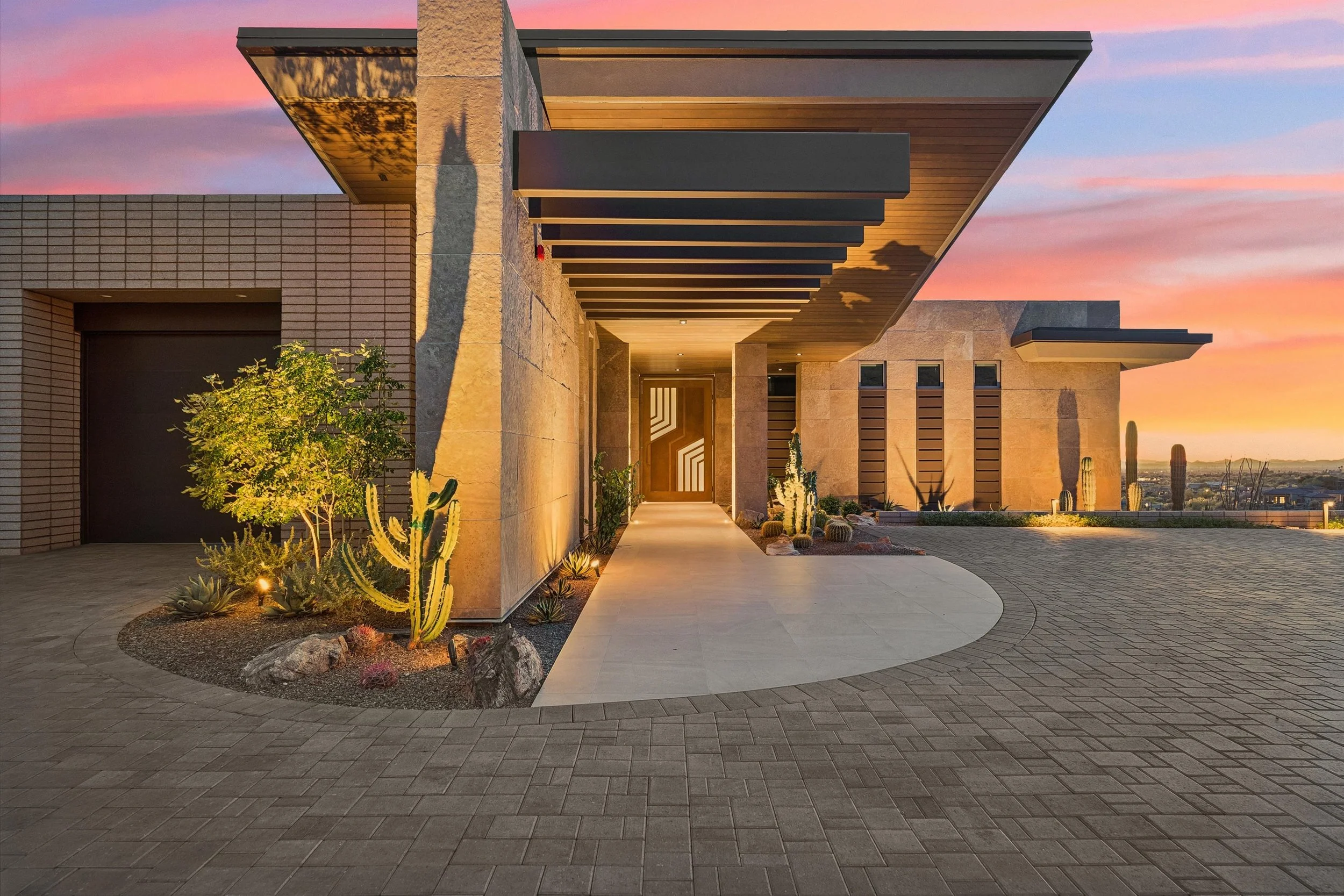
The third spotlight of our 2026 World Landscape Architecture Month series is Enchanted Garden Landscape, from the metro area of Phoenix, Arizona. Renowned for seamlessly integrating refined hardscape elements with regionally inspired plantings, their landscape design team partners with their experienced construction and installation teams to fully realize each design.
We connected with their Landscape Designers, Donna Winters and Ernie Di Vito, about the path that shaped their career in landscaping, along with the insights that guide their work today.
Read their full interviews below:

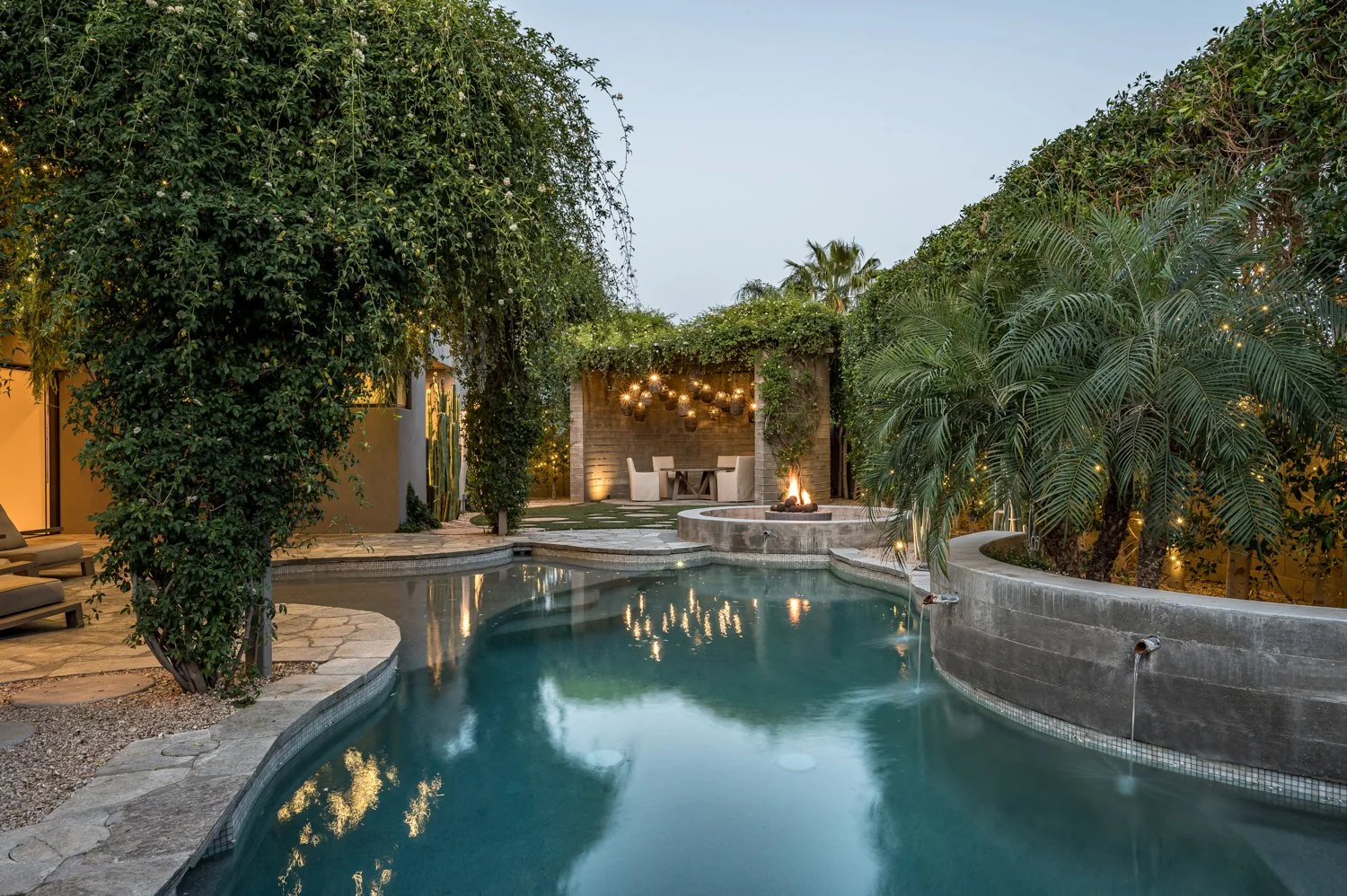
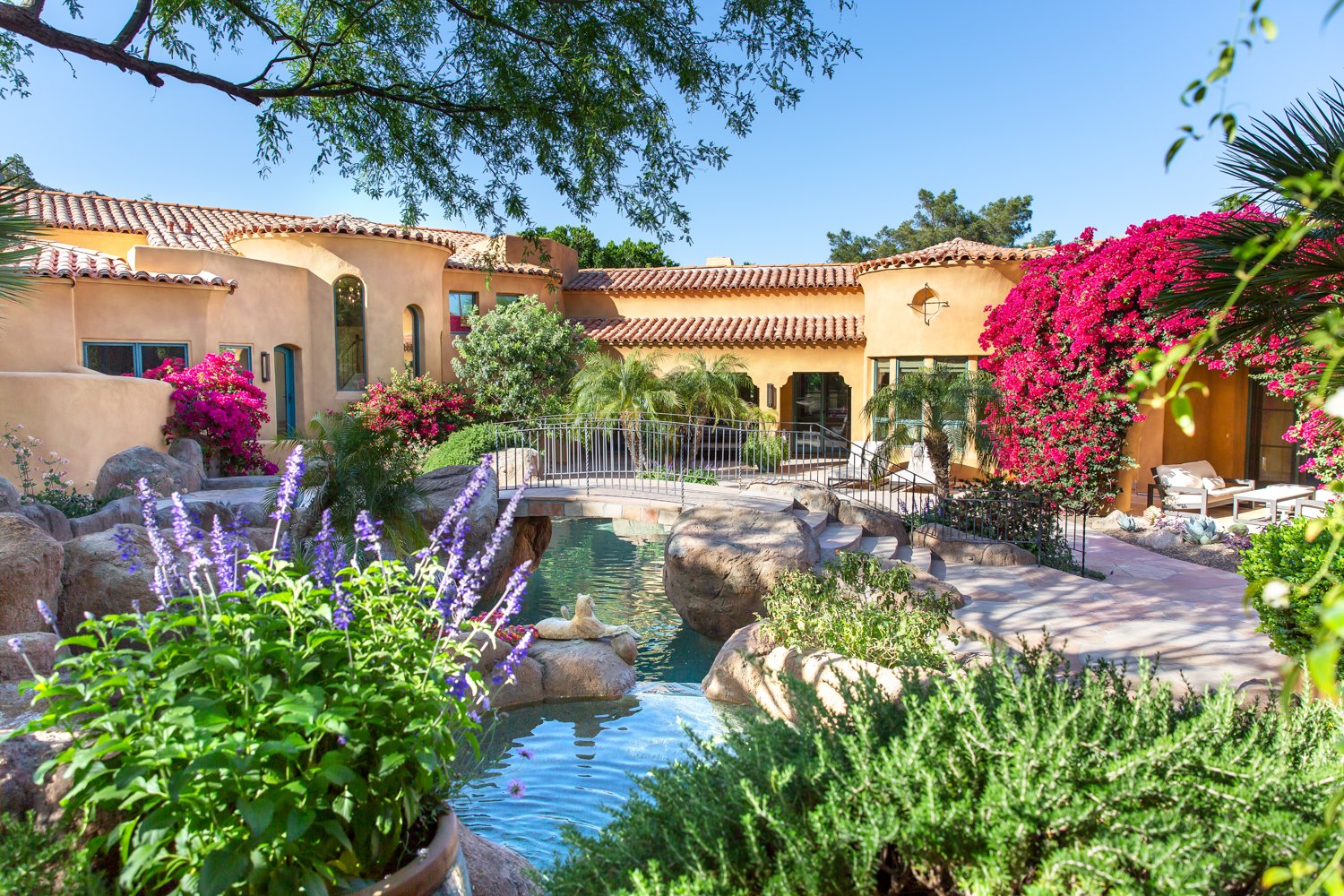
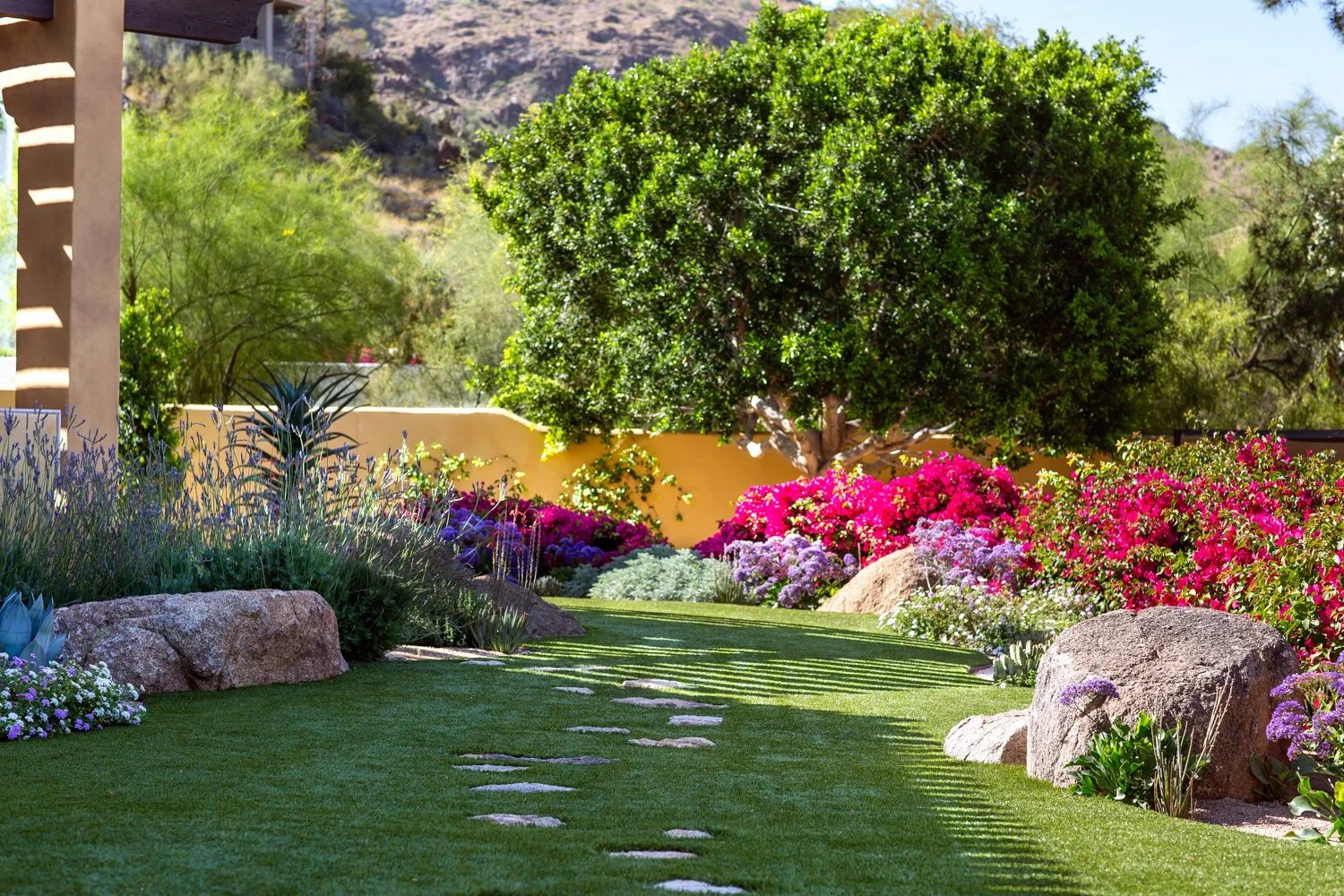
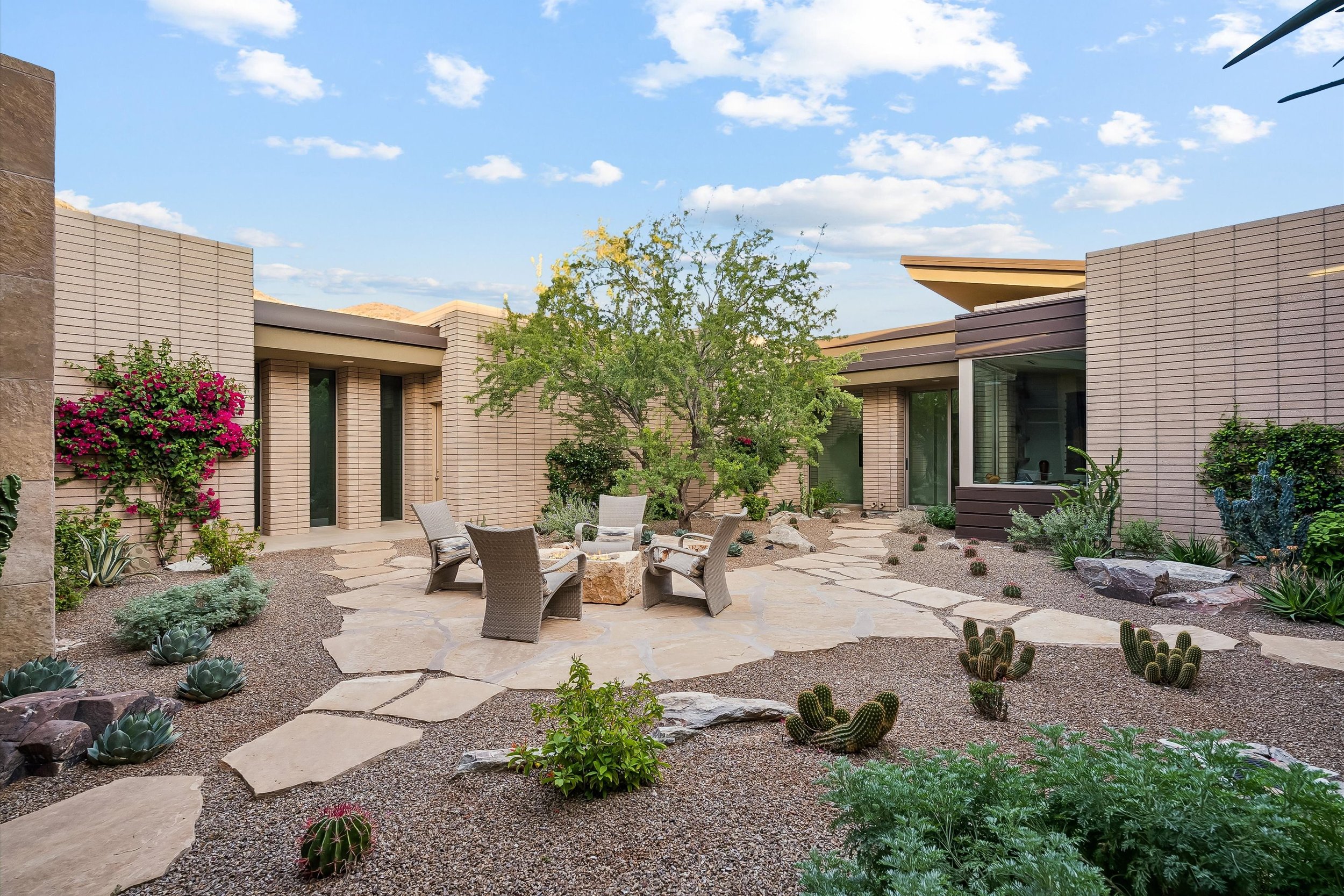
What first drew you to landscape architecture/design, and how has that motivation evolved over time?
I grew up on a farm in rural Kansas where we practiced farm to table sustainable living off the land. The practice of conservation, restoration, and preservation of our precious resources is very important to me. Respect for nature is evident in our designs which reflect seamless transition between natural open space and developed spaces. I have always loved plants and worked at multiple plant nurseries after high school and while attending college. I love what I do. I live it, breathe it, and talk about it 24/7. It is my joy!
How would you define your approach to landscape design today?
Knowledge empowers me to share and mentor others so that they know the joy of a job well done, from concept to implementation. We discuss infrastructure mechanics and techniques during our installation. Every employee, foreman, and project manager is taught about the science of design principles and philosophy. They learn how to adapt to the land and the architecture in terms of style. Uniquely, they also are taught business ethics, mannerisms, and protocols in terms of appropriate etiquette. A vital human skill is learning how to "finish" a job. This means not just completing an installation, but also making sure the deal is closed with a satisfied and fulfilled client with whom we led through the process with us.
Is there a project that best represents your work or approach? What makes it stand out?
The Southwest Sanctuary project showed the diversity in our talent level. The job was a clean slate other than an existing pool and house. We were chosen by the owner and tasked with master planning a custom landscape of "healing" and "sanctuary in nature" which transforms and reflects in your mood as you move throughout the property. We had to adhere to the strict regulations and specs for Paradise Valley.
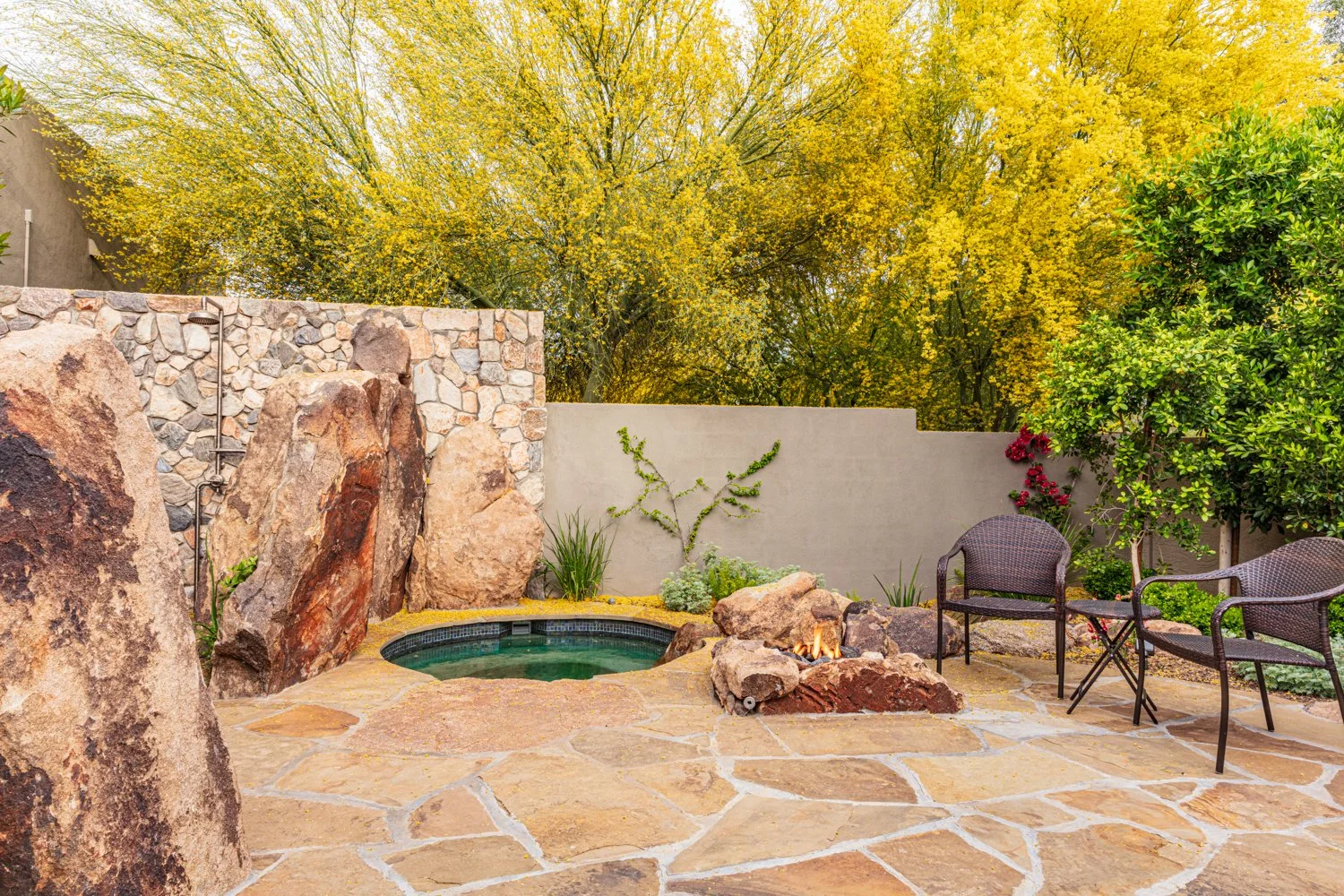
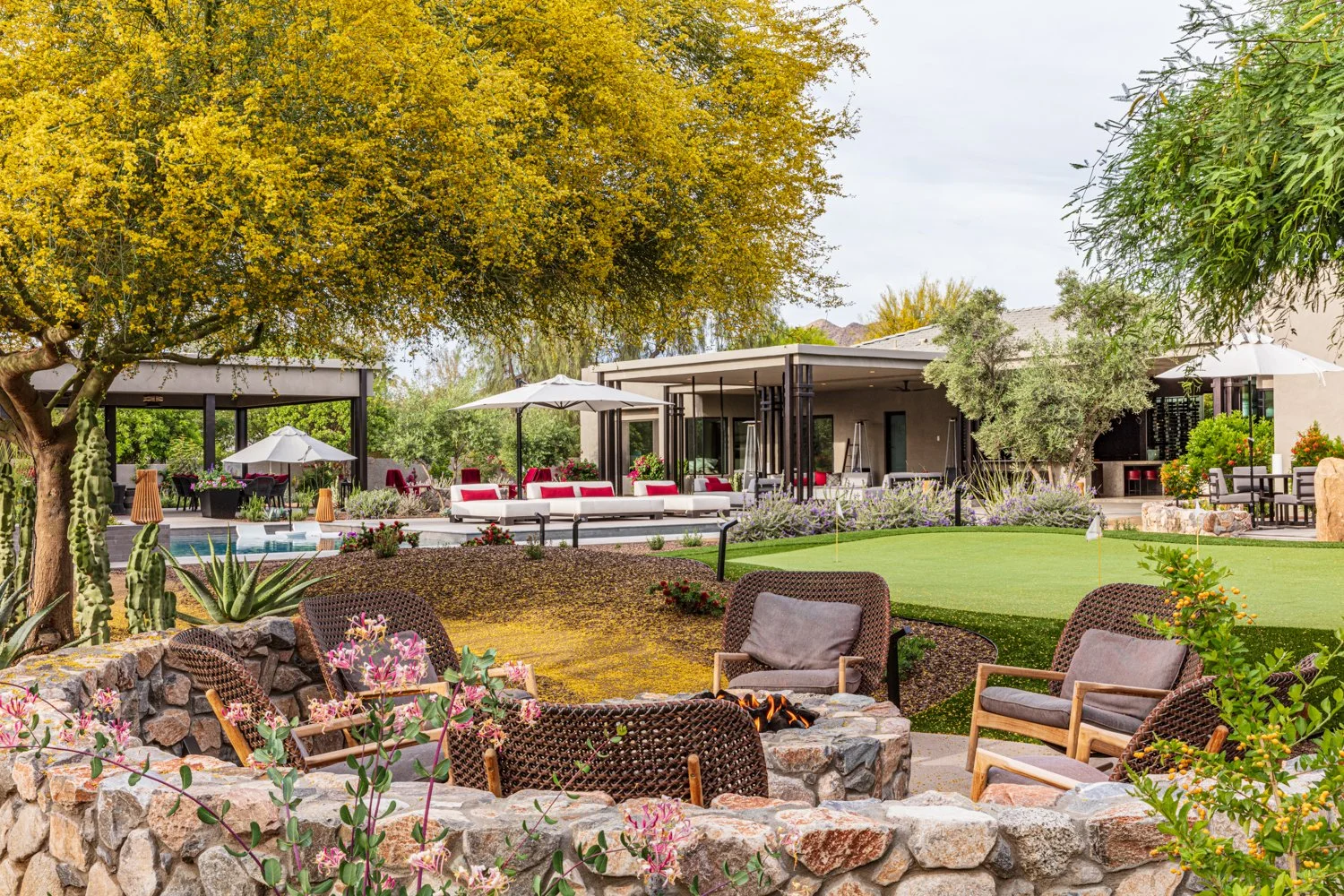
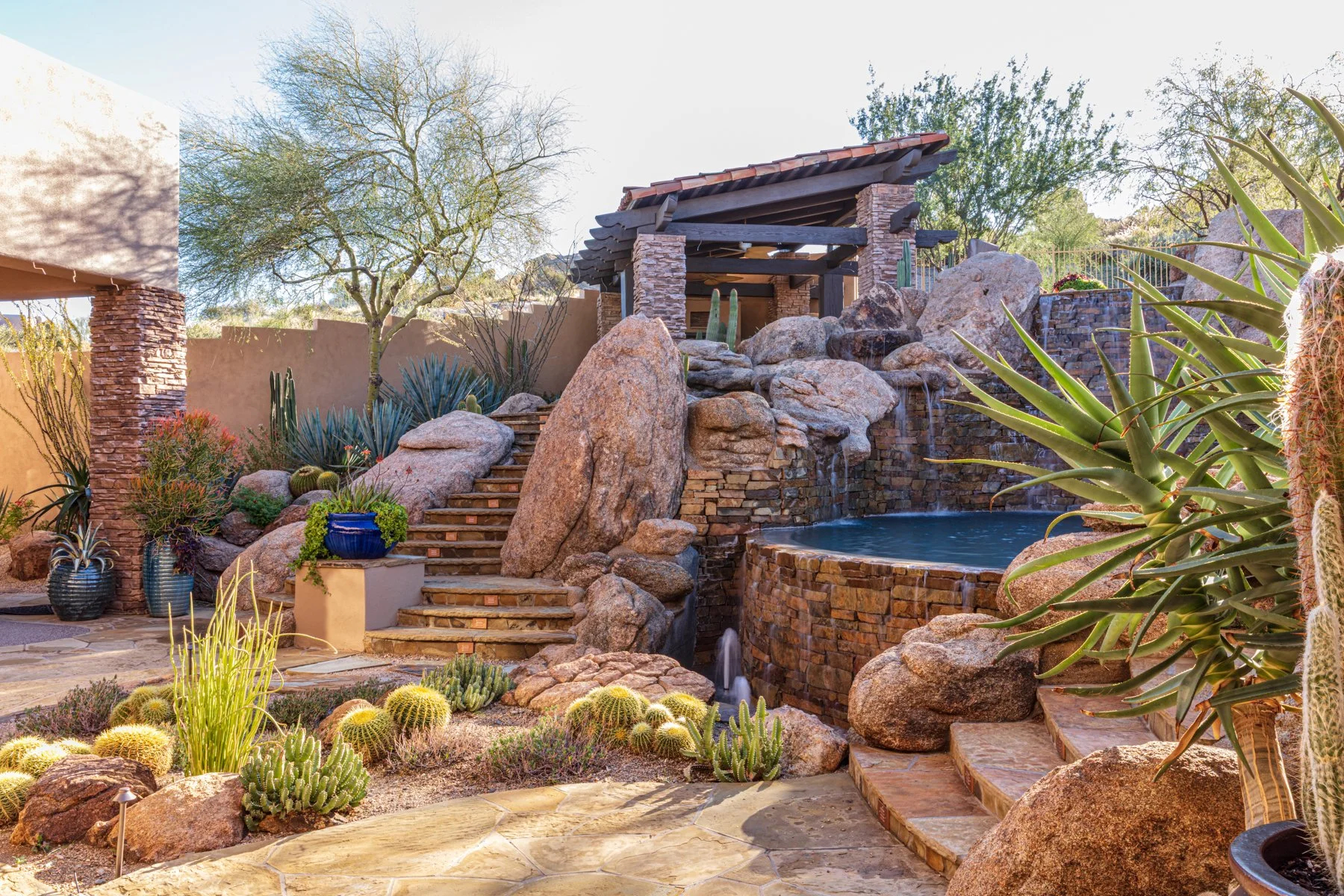
We focused on natural, grounding materials throughout—from large boulders integrated with the mounding to create private viewing areas of the Sonoran mountains, stone walls throughout the garden, and custom water features, to mature native plantings that bring visual vibrancy and privacy while providing overstory and layering to the garden.
Several notable custom features include a tortoise habitat with its own grass and burrow with a heating pad for "Sonny', a private master bathroom courtyard with its own shower, spa and firepit, a putting green with a smoking patio, and multicolor dimmable lighting so the owner could create scenes and adjust spectrums as needed for seamless day-night entertaining.
Are there specific materials, plant palettes, or design elements you consistently return to in your work? Why?
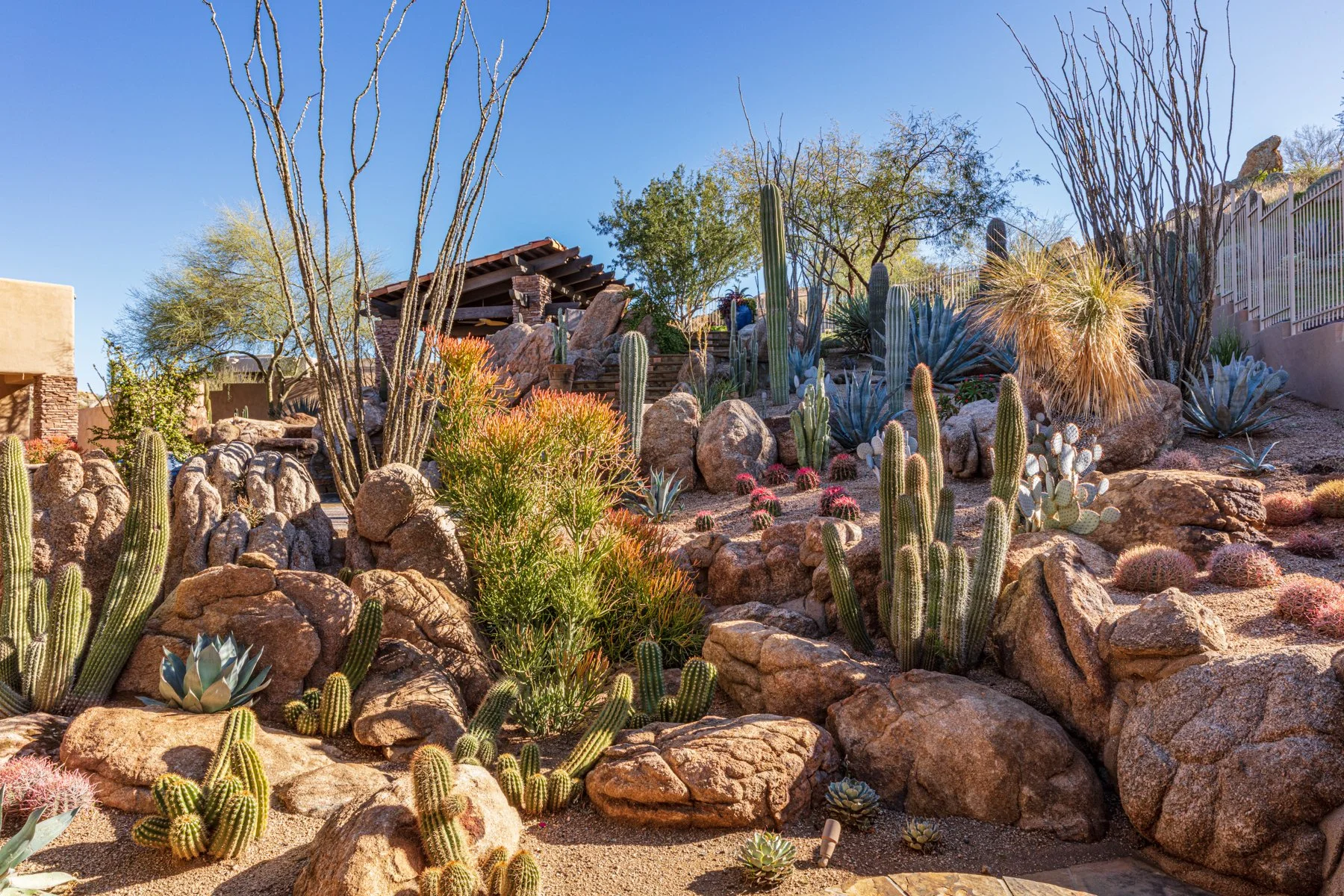
We specialize in desert restoration by incorporating regionally appropriate colors and textures, including mature trees and specimen cacti, to represent the best of the Sonoran Desert. These major design elements create our roof and walls that frame our spaces. Due to our fragile environment, grading and drainage is vital to stabilizing soils. When installed in a natural way to emulate nature, the outcome is stunning and "believable". The elements to stabilize these soils can be as effective as a structured engineered approach, so they should not be mutually exclusive. Our guidelines, water restrictions, and rates require sensitivity to our limited precious resource.
What shifts are you seeing in how outdoor spaces are designed or used today?
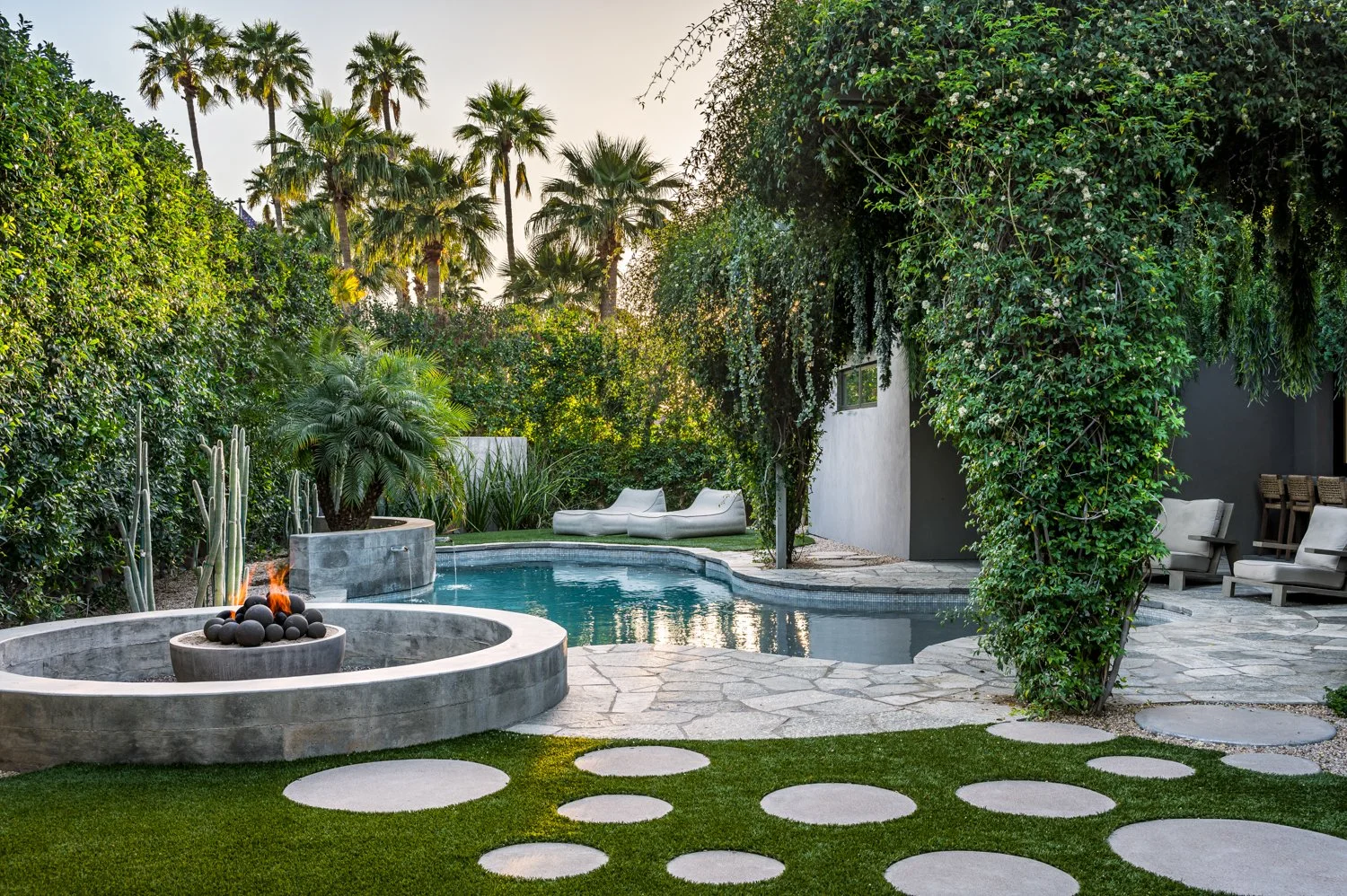
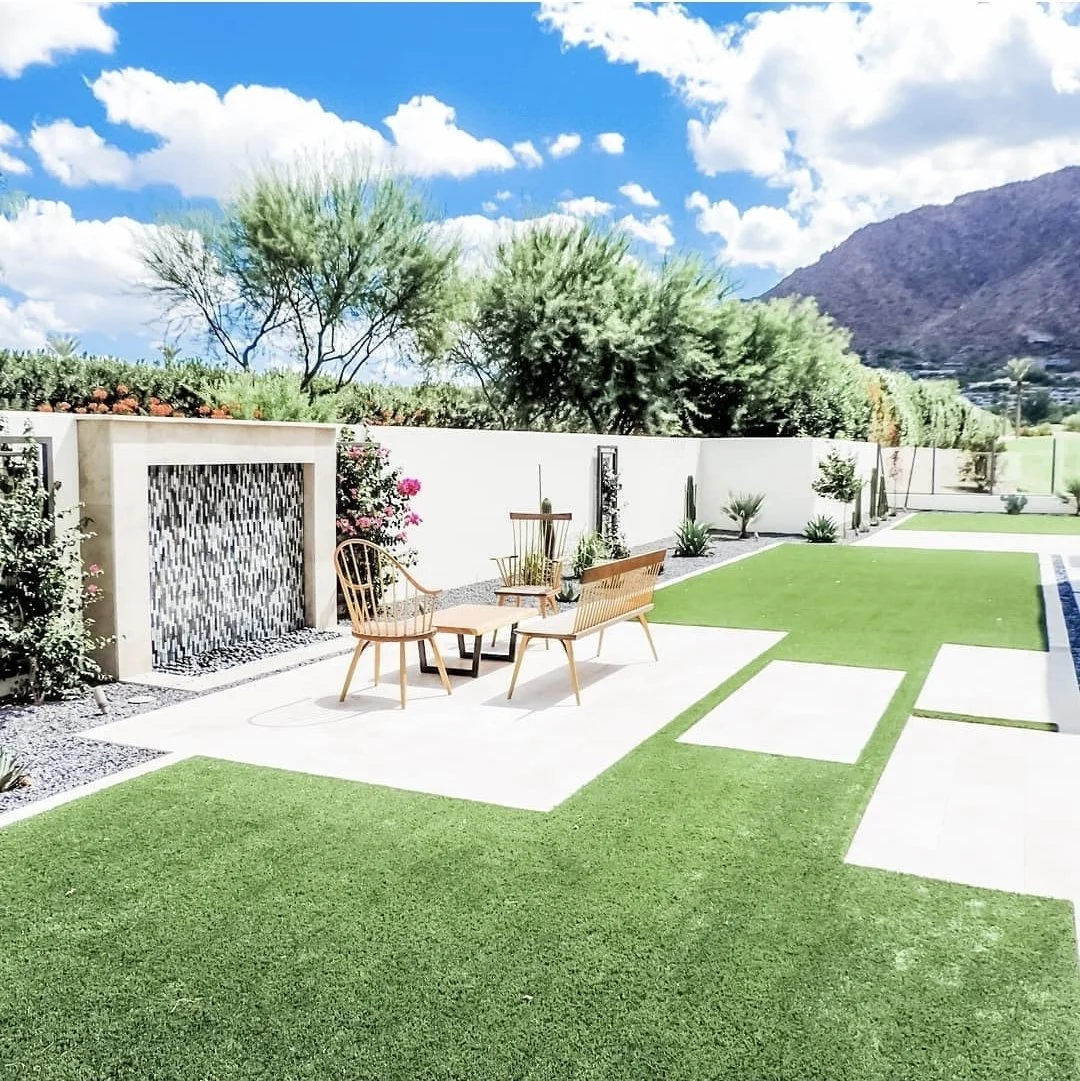
We are seeing much more desert contemporary architecture which requires a specific style reflecting clean simple lines. The state allows artificial turf in yards and, just like solar panels, they cannot be denied. In Arizona, we entertain outside and are drawn and motivated to be outside all of the year due to our wonderful outdoor spaces. Shade is being promoted by the cities and the desert botanical garden to avoid urban heat island effects. Creating destinations for outdoor cooking, dining, and firepits creates humane spaces for people to gather, connect, and catch up. These sanctuaries are also a place of respite from our busy everyday routines.
What experiences, people, or projects have had the greatest influence on your perspective as a designer?
My background and knowledge of plants, gardening, and the equipment was significant. This background was my motivation allowing me to graduate Summa Cum Laude outstanding graduate of the college of architecture and the first time they chose someone in the landscape architecture program. I received ASLA (American Society of Landscape Architects) honors every year. My professor hired me as soon as there was no conflict of interest. I learned about planning from him, as well as presentation skills. At HNC architecture, I did commercial, industrial, and high density landscape architectural drawing and regular field reports and inspections. From there, I was hired by a native Arizonan, Phil Hebets, who began the native plant salvage process. We specialized in design-build with a very "hands-on" approach and have worked with many industry leaders. I founded Enchanted Garden Landscape so we could control all aspects of the custom design-build environment. We have since received many top awards given to us by the ALCA (Arizona Landscape Contractors Association). Personally, I have been selected as a Master of the Southwest, an accolade presented by Phoenix Home & Garden magazine which is given to industry masters of their trade and skill. I have also been involved in design review committees for over 30 years which allow interaction with other professionals. Through that, I have helped rewrite dark sky requirements (measures to reduce light pollution), landscape guidelines, plant palettes, lighting audits, and writing reports.
What’s something about landscape architecture that you wish more clients or homeowners understood?
There is a distinct difference between a trained professional and a person that can put a shovel in the ground. These skills are specialized and can be explained.

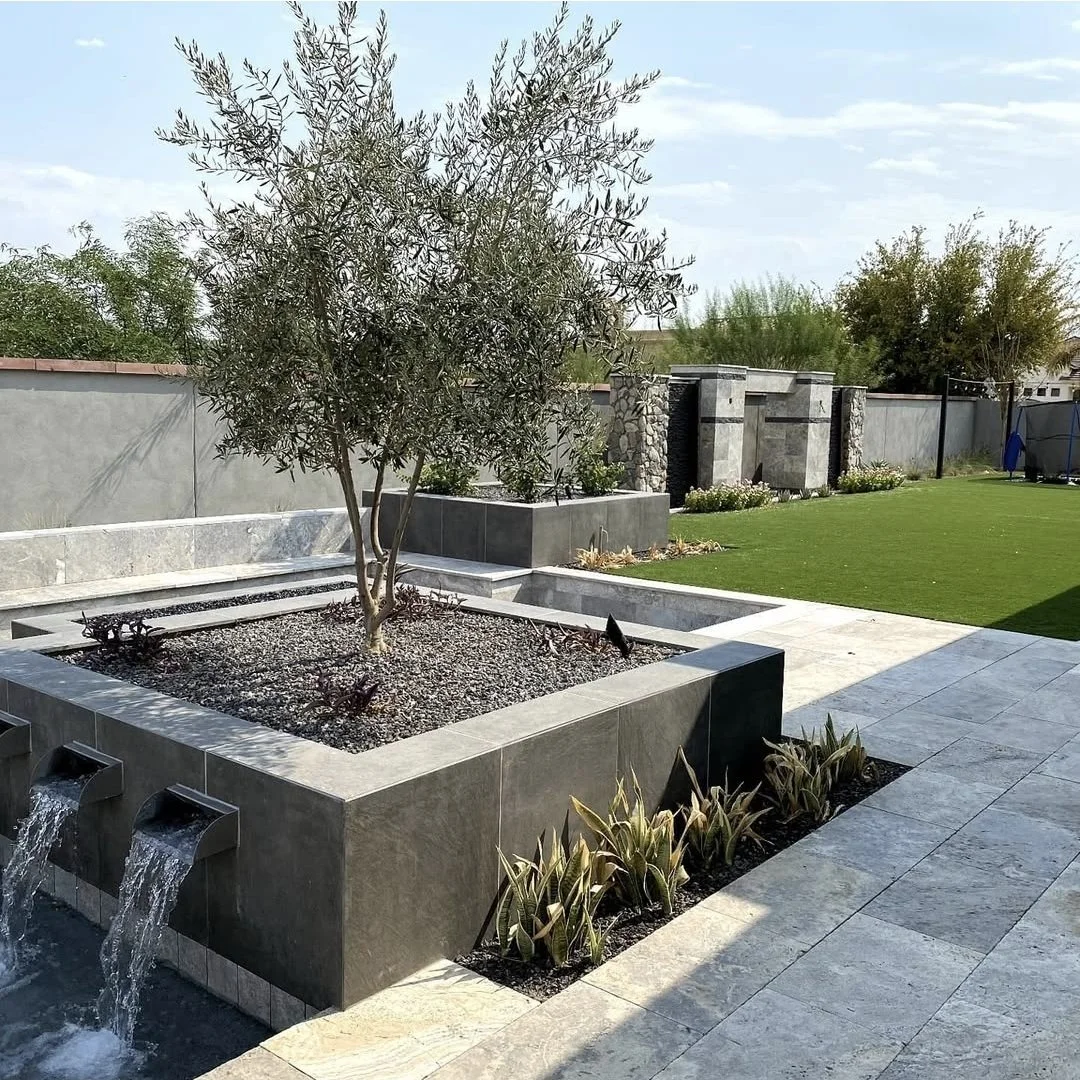
What first drew you to landscape architecture/design, and how has that motivation evolved over time?
As a young kid, I was gifted an old wooden architecture desk from a firm my father did accounting for. That was the initial spark and the beginning of many hours sitting at the desk with just a pencil and my imagination. As I grew up helping my father refurbish investment properties on the weekends, I quickly could see and appreciate how a facelift can really change a place and add tremendous value, especially with the right design elements. I now get to experience that regularly with my clients during the process from the initial design ideas to the final install. It's extremely gratifying to see your clients face when it all comes to life.
How would you define your approach to landscape design today?
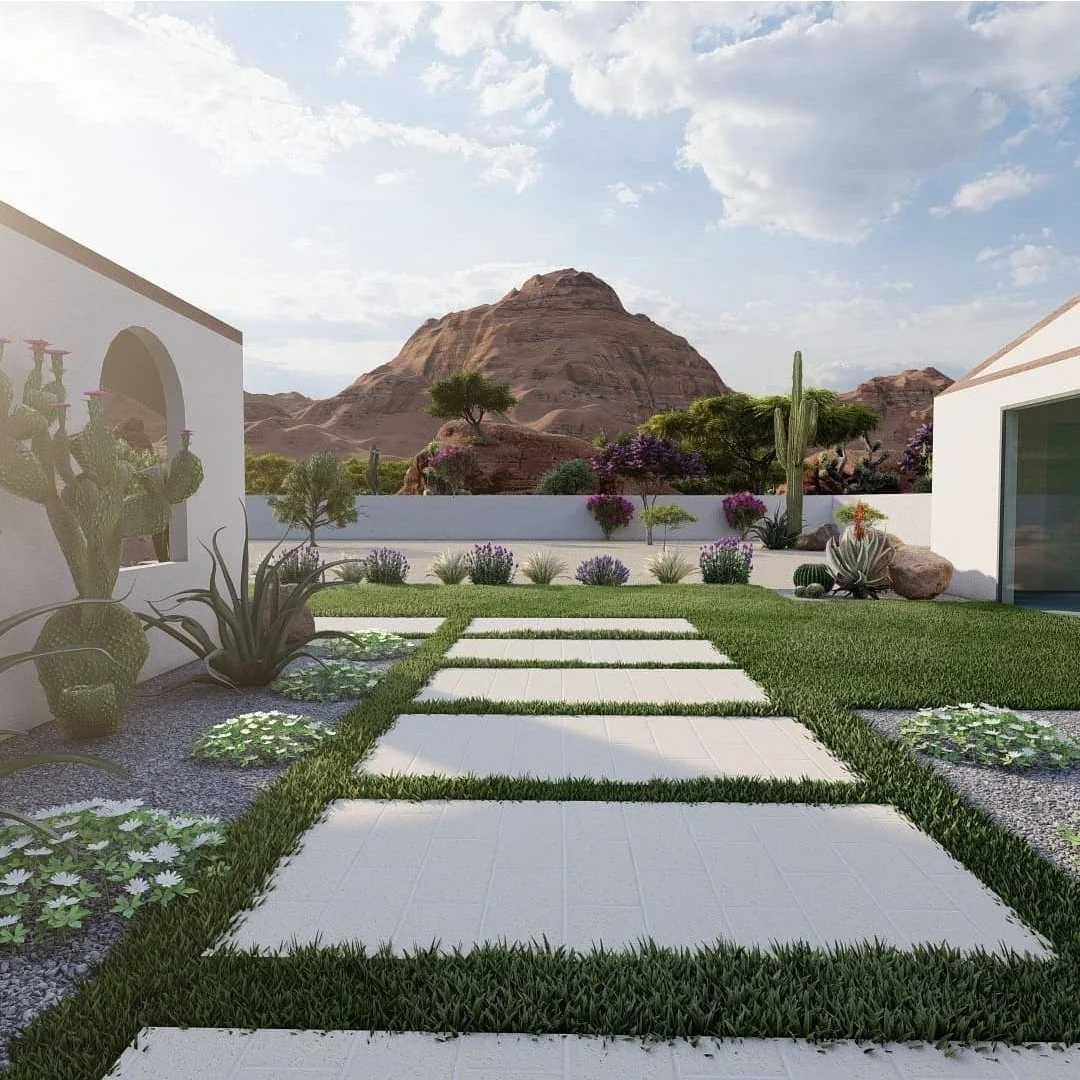
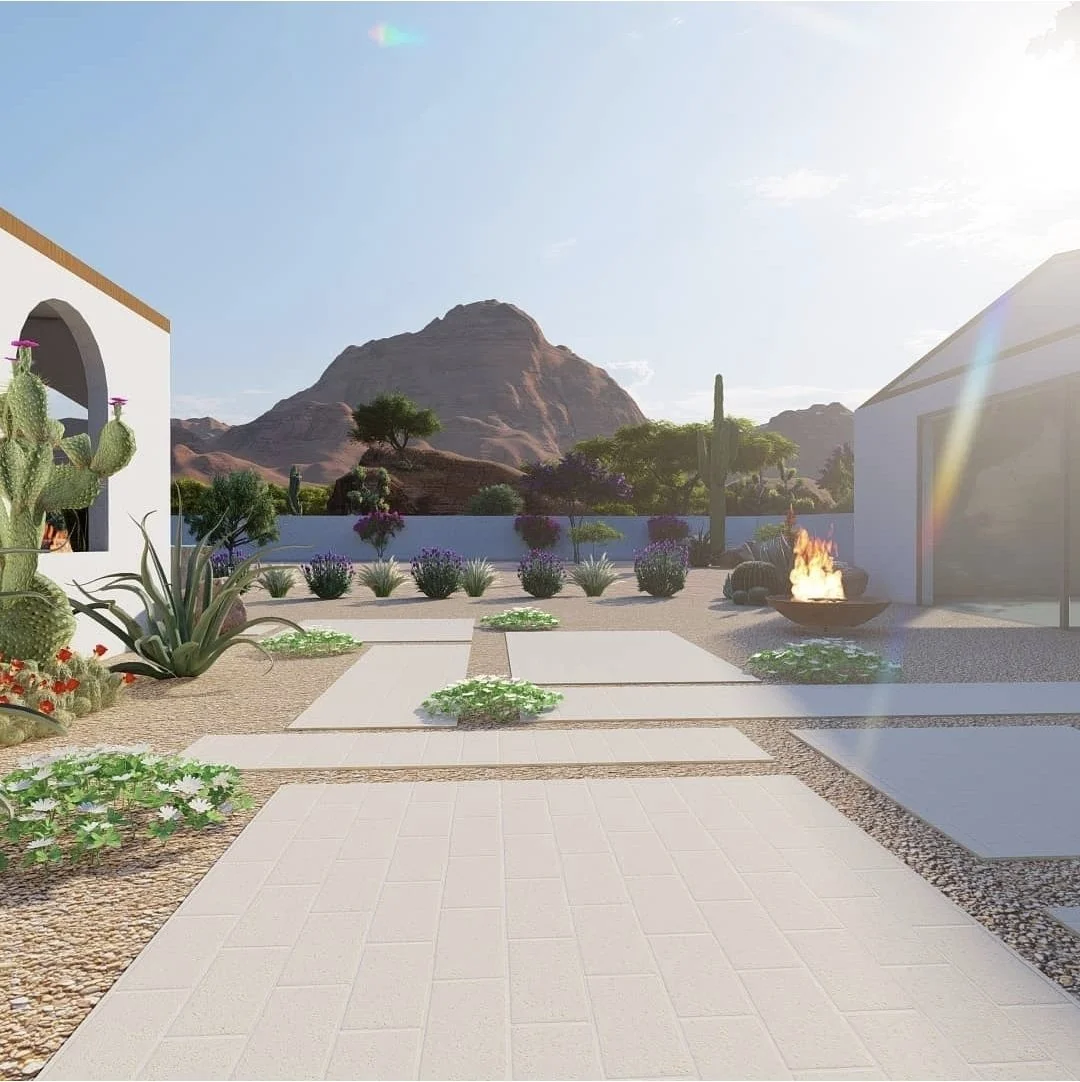
I listen first to the client and then ask the right questions to fully understand how they would like to use and feel in the space. I then pull from my overall design experience to enhance their ideas/requests and give them everything they wanted with some additional wow factors. My process typically starts with pencil & paper and then I will model everything in 3D software (Sketchup-Lumion). The 3D renderings really help the client visualize everything and I've recently added a VR experience which lets the clients immerse themselves in their design using 3D/VR goggles.
Is there a project that best represents your work or approach? What makes it stand out?
The Mountain Shadows Residences in Paradise Valley best represents my work. This project was a remodel of an old local favorite hotel from the 50's & 60's in the heart of Paradise Valley. The builder segmented the property into 2 sections, the hotel side and a residences side. I was fortunate to be the exclusive designer for all the residences and community areas (100 units, 15 Residences along the golf course). The project had a little bit of everything and allowed me to utilize an array of skills.
Are there specific materials, plant palettes, or design elements you consistently return to in your work? Why?
Depending on the style of each property, I have my go to selections but I always like to find ways to make each design unique and fresh in its own way. I naturally lean towards neutrals/organic and love the perfect blend of materials, such as concrete, wood, metal, and rock, and a pop of color throughout—sometimes less is more.
What shifts are you seeing in how outdoor spaces are designed or used today?
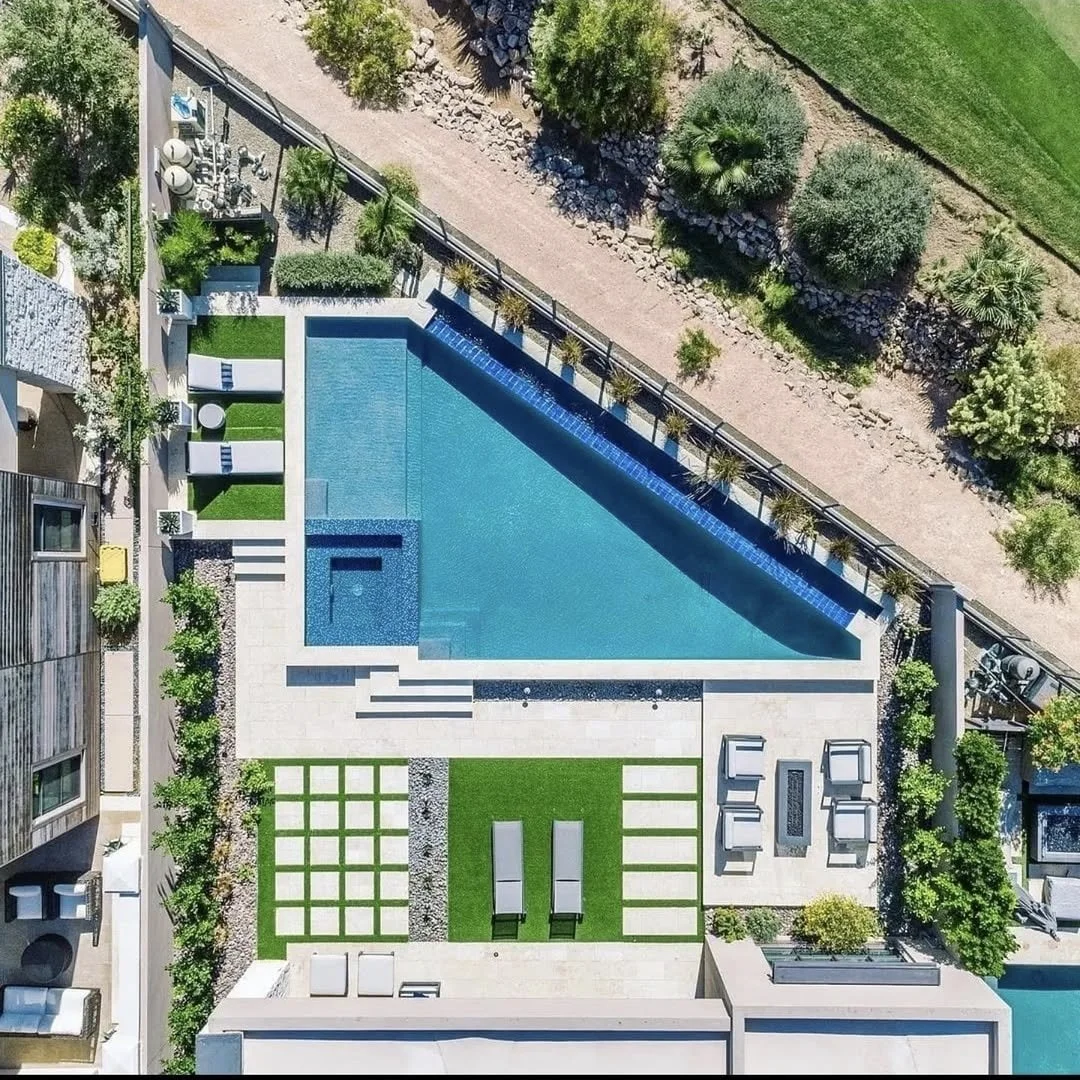
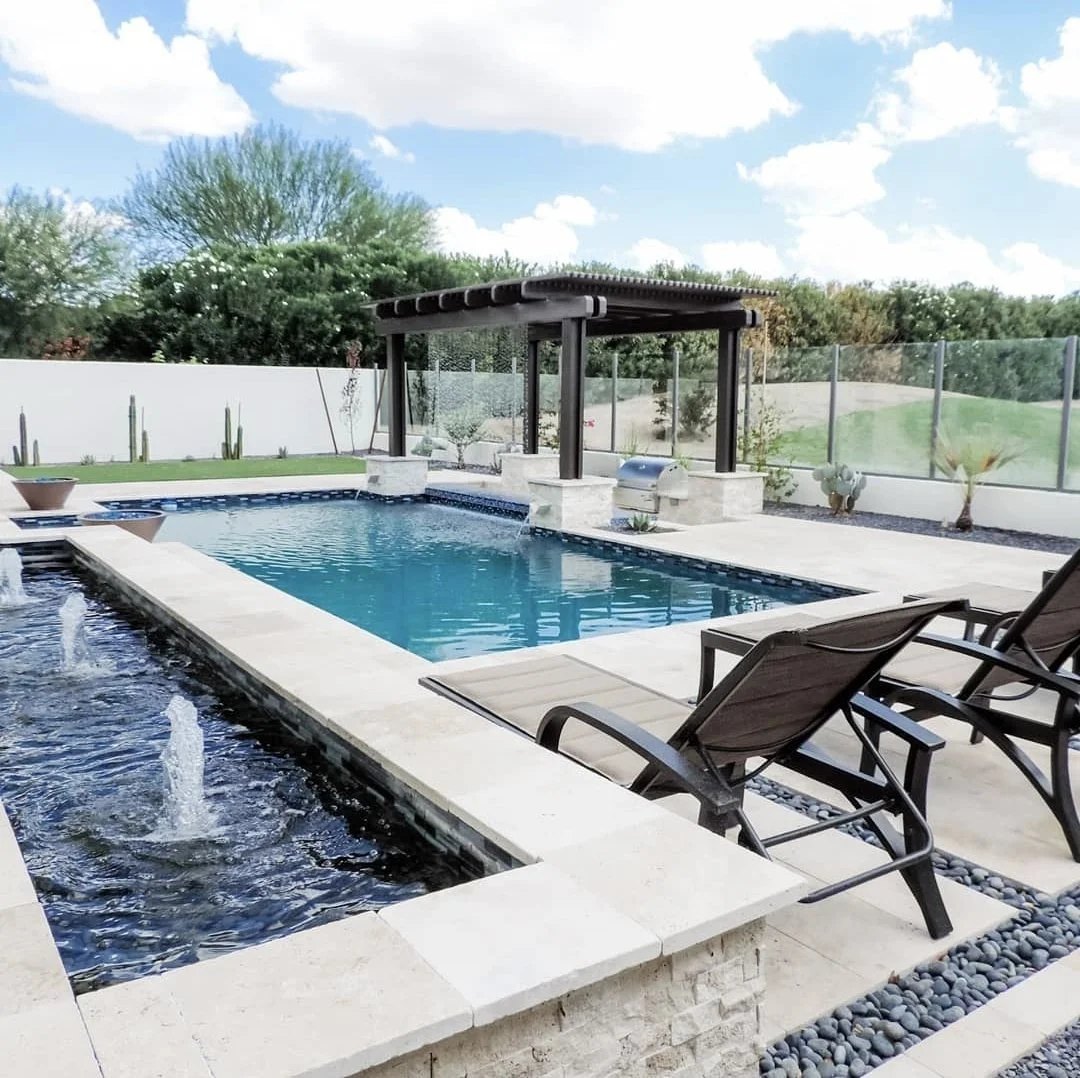
Being born and raised in Arizona, I have definitely seen the trends change over the decades. Most of the new builds are now either desert contemporary or ranch style elevations. Clients are typically looking for a clean, often linear, low maintenance design full of little details with a blend of materials and textures. The shift towards more water wise options like artificial turf and xeriscape continues and are more common now. Pickle ball courts and cold plunges are in. Everybody still wants a pool, that hasn't changed.
What experiences, people, or projects have had the greatest influence on your perspective as a designer?
Growing up in Frank Lloyd Wright's backyard has always been an influence but one of the first landscape/pool designers that caught my eye was Bianchi Waterscape. He combines water and spaces unlike anyone else and is a true master. I also had a construction manager once tell me, "If you can think it, we can build it", and ever since then I've been letting my imagination go wild.
What’s something about landscape architecture that you wish more clients or homeowners understood?
Being able to visualize everything, especially the mature look. This is why I believe in person meetings are important and allow them to touch & feel the materials. I like to include in my presentations a color marker 2D overhead plan, 3D renderings, VR experience, samples, and a plant/material PowerPoint—anything to help bring the design to life.
To see more projects and current designs, follow Enchanted on Instagram, Facebook, and LinkedIn.