
2026 World Landscape Architecture Month Spotlight - Bruss Landscaping
Breathtaking Functional Outdoor Spaces: Through the Lens of Bruss Landscaping
For the sixth edition of our 2026 World Landscape Architecture Month series, we’re featuring Bruss Landscaping, headquartered in Wheaton, Illinois and reaching the western Chicago suburbs. Bruss stands out for their unmatched design and service level, spanning three generations of Bruss family leadership.
We interviewed their impressive team of Landscape Architects, Michael Kehl and Kyle Sanders, and Landscape Designers, Lindsay Buchalski and Sam Baner, regarding the influences that led them to where they are now and the values that guide their creative process today.
Read their full interviews below:

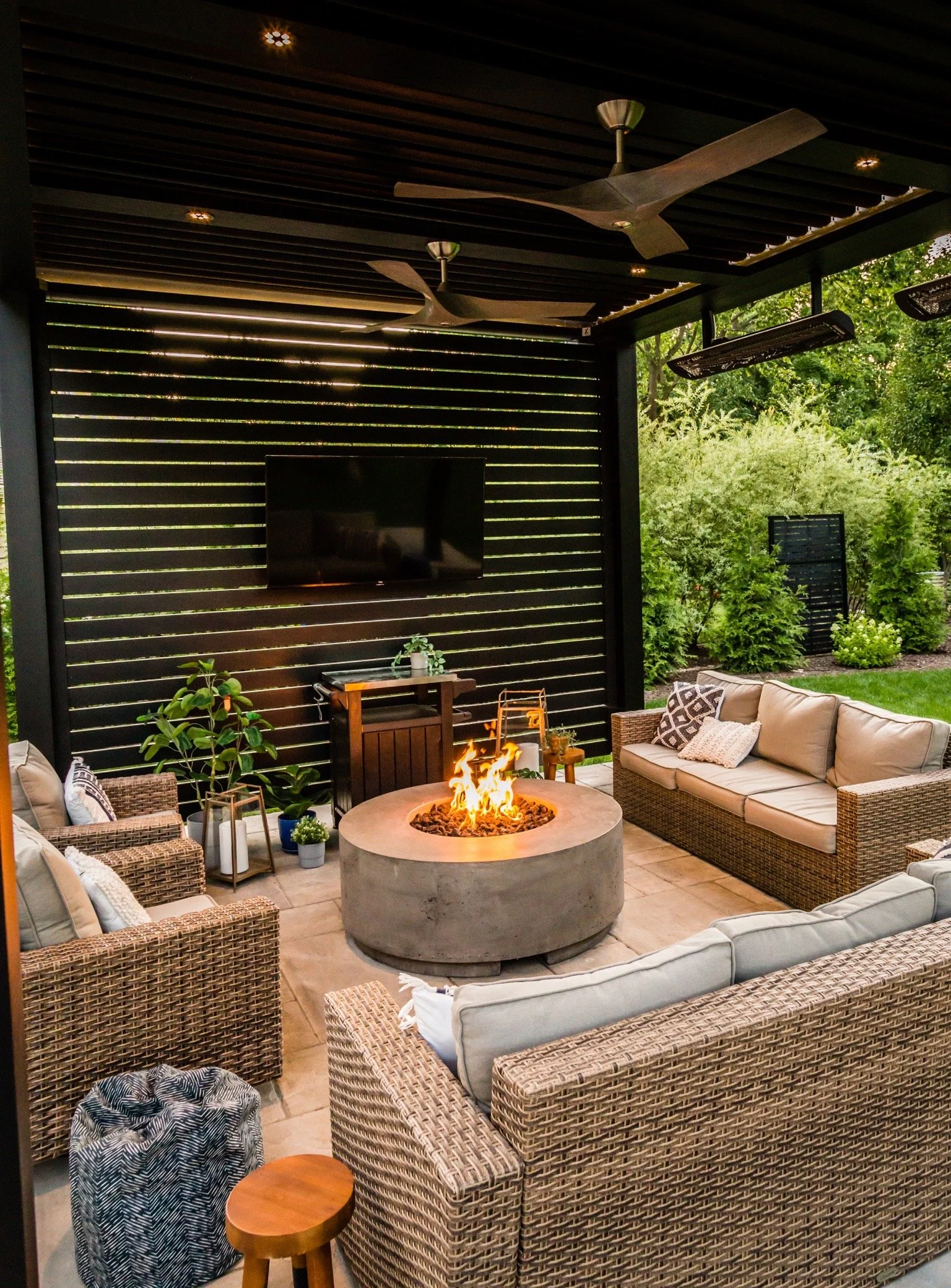
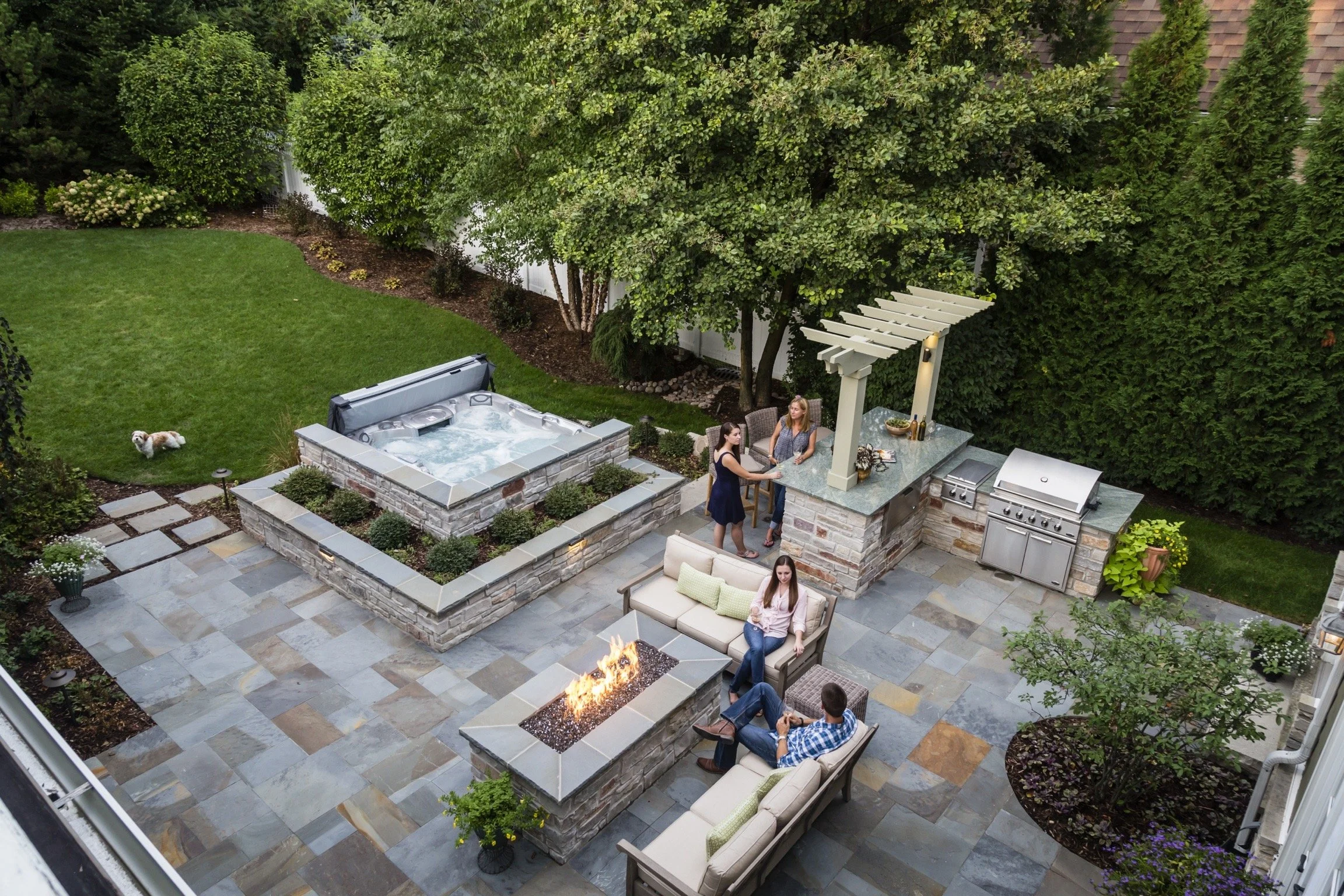
What first drew you to landscape architecture/design, and how has that motivation evolved over time?
I loved being outdoors and working outdoors was exciting as every day presents a different challenge. Creating dynamic spaces that families and animals enjoy is fun but getting to know the people and families is the best part. The continual friendly banter between myself and clientele and my amazing crew members makes it fun.
How would you define your approach to landscape design today?
Function with flare
Is there a project that best represents your work or approach? What makes it stand out?
I have multiple highlighted on our website that are beautiful at first glance but become more and more engaging when experienced in person where you can truly appreciate each perspective.
Are there specific materials, plant palettes, or design elements you consistently return to in your work? Why?
For me, it’s consistent and clean plants like allium, autumn moor grass, and petite hydrangea that stay compact and provide a neat but colorful look. Pair this with a high end manufactured or natural stone and you’ve got an updated space with a timeless feeling.
What shifts are you seeing in how outdoor spaces are designed or used today?
I see increased desire for more luxury features which can make for a more complicated finished look, so extra thought and care should be taken. AI is a tool I would approach with caution.
What experiences, people, or projects have had the greatest influence on your perspective as a designer?
Every project reinforces my process but also provides a learning experience to continually get better from.
What’s something about landscape architecture that you wish more clients or homeowners understood?
Plants are naturally occurring things and each one is different and grows differently. The pretty picture is just a picture (again use AI cautiously). The real beauty is the process of the installation and if that is done at the highest level of craftsmanship and service, you’ve done your best.

What first drew you to landscape architecture/design, and how has that motivation evolved over time?
The initial motivation that led to a summer job building walls and patios started from a love of the outdoors, more specifically, hiking the Smoky Mountains on a family vacation. The experience of building and creating led me to the Landscape Architecture program where I learned how to think critically and creatively and appreciate the layers involved in creating unique spaces. Connecting people to those spaces through the work we do now is everything and building those lasting relationships pulls it all together.
How would you define your approach to landscape design today?
Ultimately, it’s about asking the right questions and being patient enough to build solutions that exceed a clients expectations.
Is there a project that best represents your work or approach? What makes it stand out?
This project for me is a rose garden we installed last year. What could have been a pretty straightforward solution evolved to add raised cedar garden panels, climbing roses, and a granite cobble edge that took a fun idea and brought it up a level to where it’s now one of the clients’ favorite part of their yard. Now they’re having us build a seating area just so they can enjoy it!
Are there specific materials, plant palettes, or design elements you consistently return to in your work? Why?
I consistently return to natural stones, both as paving and veneers. Pulling the material palette from the home allows you to create spaces that, at their peak form, feel like a cohesive extension of the thought behind the house, not something cool that was added later.
What shifts are you seeing in how outdoor spaces are designed or used today?
People are enjoying the added usages outside and are finding more excuses to be outside and as an extension in our climate, are looking for ways to extend the length of their season through various levels of enclosure, fans, heaters, screens, etc.
What experiences, people, or projects have had the greatest influence on your perspective as a designer?
Every client and coworker has its own lesson to learn or piece to take away.
What’s something about landscape architecture that you wish more clients or homeowners understood?
I wish more clients understood the true extent of its reach in terms of knowledge and how much better a finished space can be when those various pieces are worked on together as opposed to broken apart and treated as separate spaces (this is mostly in relation to home expansions or new construction).

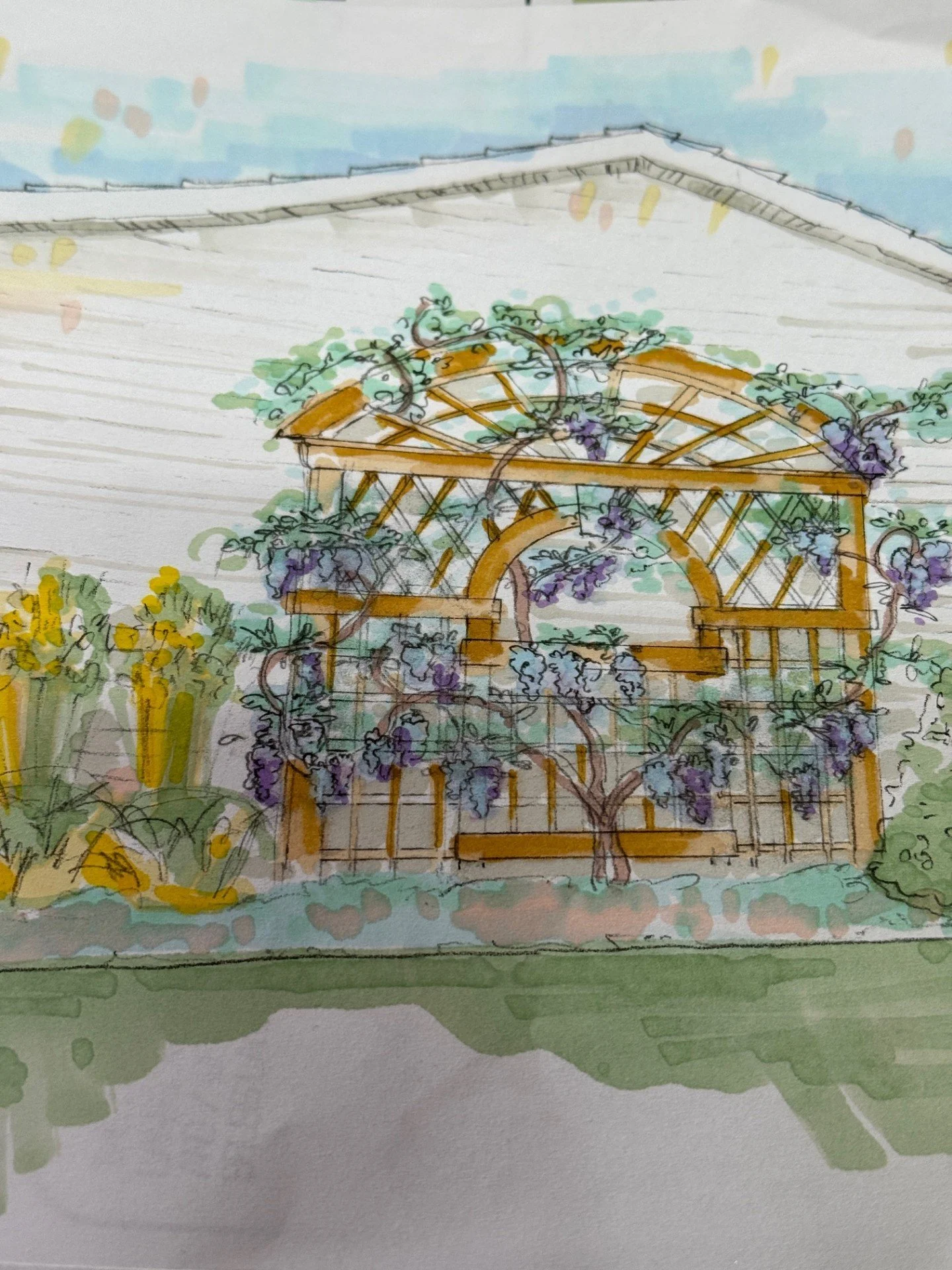
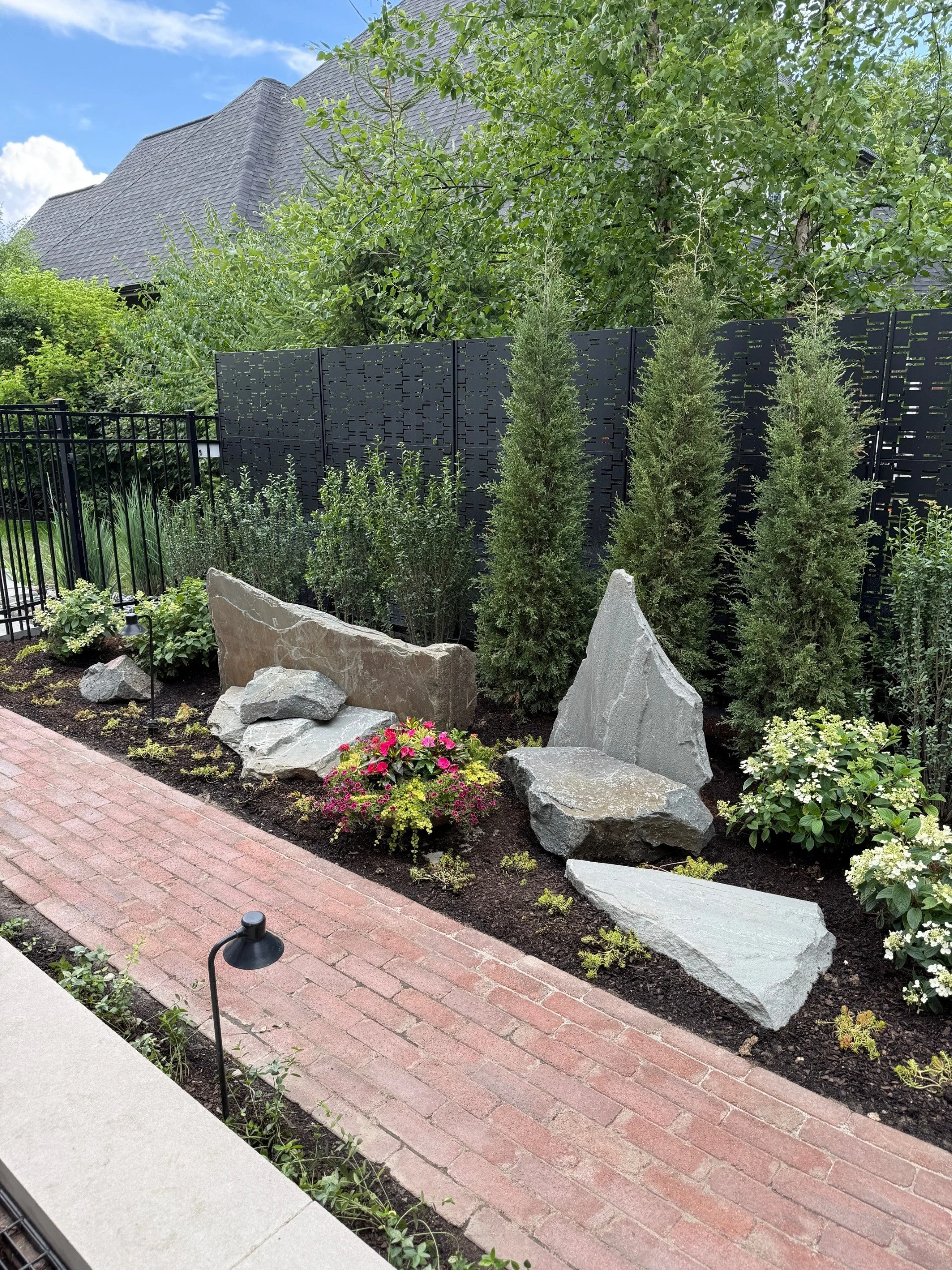
What first drew you to landscape architecture/design, and how has that motivation evolved over time?
I was first interested in a career path that would utilize creative thinking and allow me to work outside. I am a landscape designer for those same reasons, but also to create lasting relationships with clients so that they may enjoy the outdoors.
How would you define your approach to landscape design today?
I look at each project as a challenge to bring forth the most interesting, creative solution I can, pushing the boundaries of what clients think is even possible. I strive to bring value to each and every project that I work on, no matter the size or scope.
Is there a project that best represents your work or approach? What makes it stand out?
I worked on a small courtyard space last year that I think encapsules my desire to bring fresh ideas and the unexpected into projects of any size.
Are there specific materials, plant palettes, or design elements you consistently return to in your work? Why?
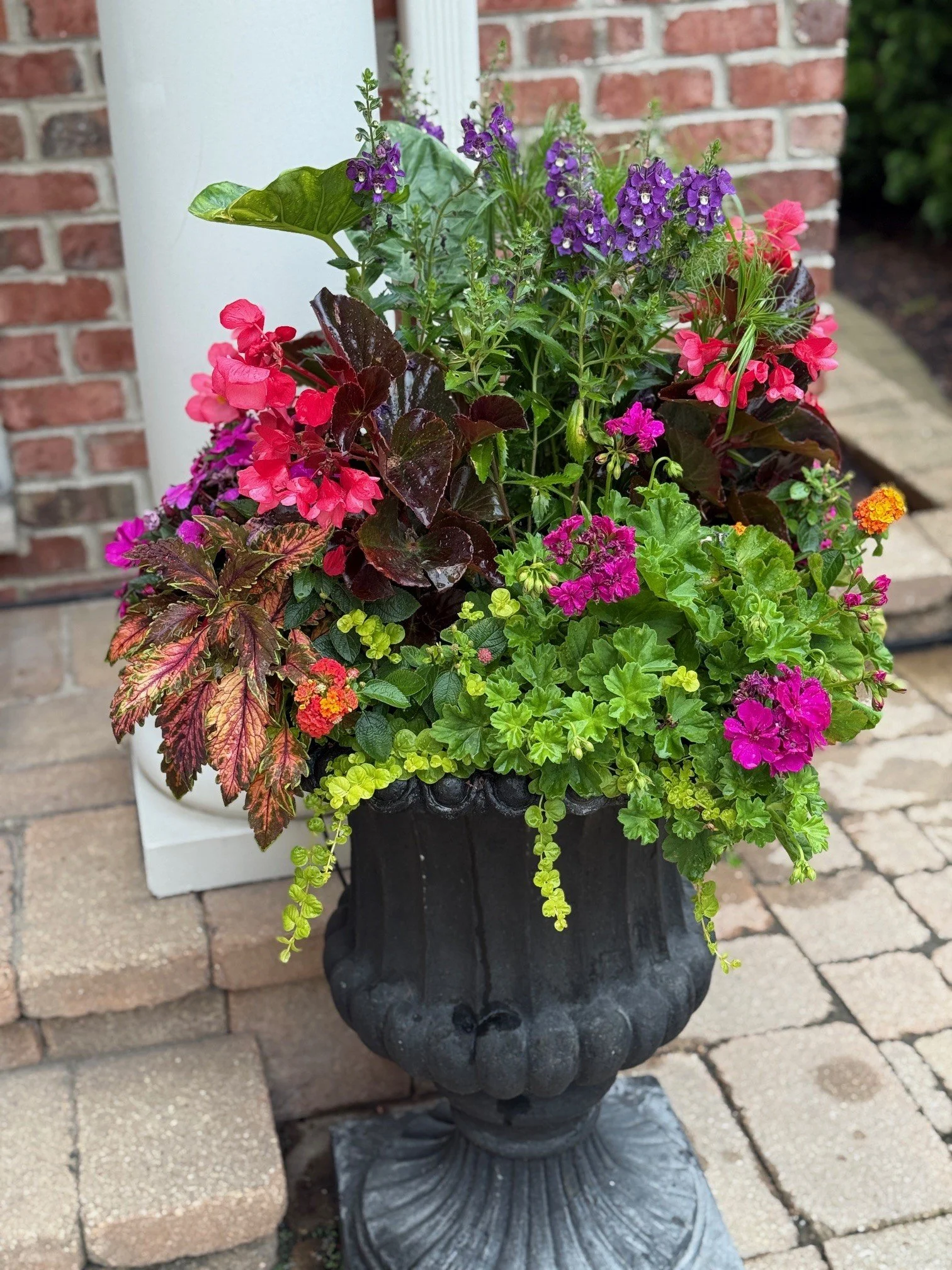
I do have a plant pallet I like to use for shadier sites; full sun allows for much more freedom in the Midwest. So with clients looking to add color to shade gardens, I have a trusted grouping of plants that I rely on as my go-to pallet. I find myself repeatedly mixing stone into the landscape as an accent as well. There are so many unique types out there and the ways to display them are endless.
What shifts are you seeing in how outdoor spaces are designed or used today?
People are searching for creature comforts in their outdoor spaces more now than ever. Any way to extend their ability to be outside with amenities like heaters, screens, tv's, and fans to pergola structures seems to be the trend of the season. These value-added bonuses often assure people they will be enjoying their investments to the fullest leaving no regrets on the table.
What experiences, people, or projects have had the greatest influence on your perspective as a designer?
I come from a family of very hard-working individuals who strive to give 100% all the time. If something is worth doing, it's worth doing right and I think that mentality drives me as a design professional every day.
What’s something about landscape architecture that you wish more clients or homeowners understood?
We can't control nature; we can arrange the environment to be as aesthetically pleasing as possible, but we don't control 100% of the outcome. For instance, we can plant a beautiful garden with multi-seasonal interest, but we can't control which birds or insects choose to visit the garden. We see plenty of requests for lots of flower color within the landscape, but no bees. The discussion then becomes more of an education session about what is and is not possible.

What first drew you to landscape architecture/design, and how has that motivation evolved over time?
Growing up, I watched my dad design and build our family home in Illinois, seeing firsthand the intersection of careful thought, structural planning, and artistic vision required to create a space from the ground up. Early on, I was purely drawn to that creative, hands-on process. As I’ve advanced, my motivation has evolved into a deep curiosity about the future of the industry. I am now highly focused on how we can bridge traditional design sensibilities with emerging technology. Behind the scenes, I'm actively exploring and developing internal software concepts to help make the planning and build process smarter and more predictable down the line.
How would you define your approach to landscape design today?
My approach is deeply grounded in natural flow, but very tech-curious. At the core, the goal of every design is to create a seamless, intuitive environment that people naturally gravitate toward. But on the backend, I am always looking for ways to de-risk projects before work begins. I utilize tools like LiDAR (Light Detection and Ranging) and am currently testing my own internal elevation mapping app, Slope Scout, to get hyper-accurate reads on sites. It’s about using technology to understand the canvas perfectly, so the final human experience feels effortless.
Is there a project that best represents your work or approach? What makes it stand out?
The design that stands out most is a sensory playground area for a local elementary school. While smaller in scale, it remains one of my favorite and most rewarding challenges. Despite the site’s modest size, the entire community invested deeply in its success. The defining moment for me was when I presented the rendered landscape plan—which, admittedly, had a fairly drab color profile at the time—and it was met with overwhelming enthusiasm. My design director, the client, and importantly, the parents and wider community accepted the plan on the first try without a single change.
That immediate, unanimous buy-in validated that the core design—focused on discovery with elements like the rope labyrinth, wooden cookies, and musical fence—had intuitively met every stakeholder's practical and emotional need. It proved that a thoughtful, functional design with immediate community impact is more powerful than any glossy render. It remains my benchmark for what a successful partnership should look like.
Are there specific materials, plant palettes, or design elements you consistently return to in your work? Why?
I lean heavily into materials that are timeless and plants that create immediate visual narrative. For hardscapes, while I respect concrete paver manufacturers, my real passion lies with natural stone. Natural stone brings a texture and organic flow to a landscape that feels authentic to its surroundings in a way pavers often cannot.
In my planting design, my philosophy is focused less on specific, complex plant lists and more on maximizing the large-scale flow, layout, and impact of color blocking. By far, my absolute favorite plant is Hakone Grass. Beyond that, I consistently return to a very intentional contrast: a distinct chartreuse color profile from plants like Hakone Grass paired directly alongside rich wine-red or deep maroon tones, such as Ninebark, or Weigela. This high-contrast color pairing creates dramatic depth and visual energy, making a site instantly feel vibrant and sophisticated.
What shifts are you seeing in how outdoor spaces are designed or used today?
The biggest shift I see coming is a demand for radical transparency and pre-visualization. Clients are increasingly wanting to see and experience their final space before a shovel hits the ground. That’s why I’m personally so invested in the tech space right now, exploring how tools like AR and deep CAD integration will eventually become standard practice. Functionally, people are already treating their outdoor areas as precise, programmed extensions of their internal living space—they want comfort, flexibility, and a high-design aesthetic that mirrors their interior standards, particularly here in Illinois where maximizing outdoor living during good weather is essential.
What experiences, people, or projects have had the greatest influence on your perspective as a designer?
My dad planted the initial seed for my interest in design, but he also inadvertently pushed me toward landscape architecture. Watching him work incredibly long hours as an architect and travel constantly made me realize early on that I wanted a different kind of balance. Plus, landscape architecture felt like a space where I could be highly creative but with slightly lower stakes—a wrong plant placement is a lot more forgiving than a miscalculated load-bearing beam in a high-rise!
But the biggest influence on my actual design styling happened in 2019. My partner, Brodie, and I had moved to the Chicagoland area, and I took a job at Hinsdale Nurseries. Up until then, I had honestly struggled to enjoy the day-to-day of the industry because my previous roles relied heavily on sales, which I quickly learned I have absolutely zero passion for.
At Hinsdale, I met a coworker—who I actually work with again today at my current office—and she completely shifted my perspective. She took all the theory I’d learned in school about spatial flow and user comfort and basically gave me the "permission" to be bold. She helped me realize that clients are actively coming to us looking for the green light to embrace artistic, fearless ideas. Learning how to merge a thoughtful user experience with bold planting choices unlocked everything for me. We were creating some of the most beautiful spaces I'd ever seen using nothing but plants—no massive hardscapes or pools needed. That freedom to be bold completely shaped the designer I am today.
What’s something about landscape architecture that you wish more clients or homeowners understood?
I wish more people understood just how much engineering, math, and logistical synchronization goes into making a seemingly simple space feel effortless. A beautiful landscape is the last 10% of the project that everyone sees, but that effortless look is only possible because of the subterranean 90% that is built correctly. It's about complex water management, grading, soil science, and invisible structural support. Achieving that 'effortless' feeling is actually the result of some very sophisticated problem-solving.
To see more projects and current designs, follow Bruss on Instagram, Facebook, and LinkedIn.